GTronTec Industrial AI Achievements Win Two Awards at the 2026 “Data Elements ×” Competition, One Advances to the National Finals

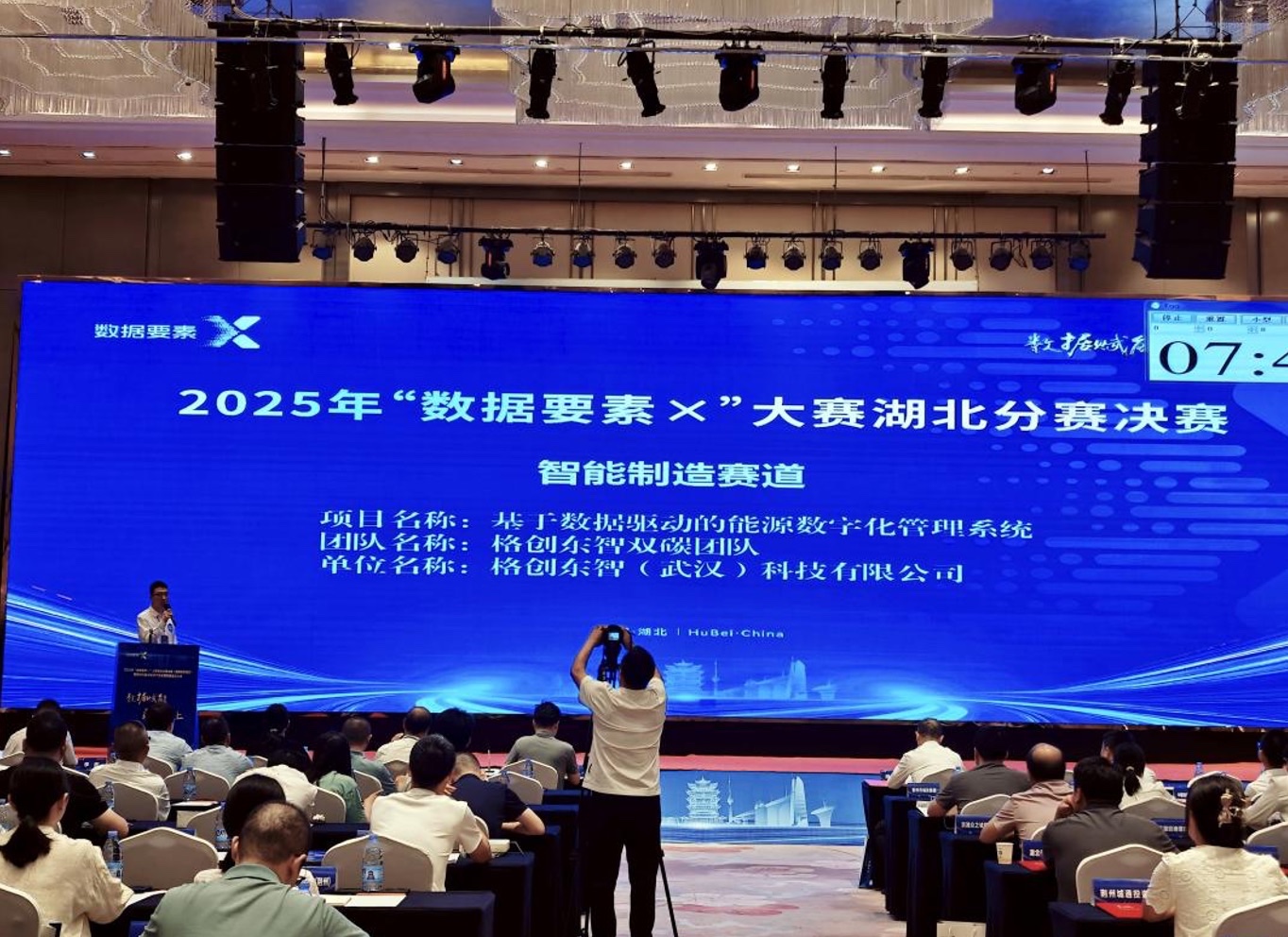
On September 9, the award ceremony of the 2026 “Data Elements ×” Competition Hubei Division and the “Data Elements ×” City Tour (Yichang Station) event, hosted by the Hubei Provincial Data Bureau, were grandly held. Two industrial AI achievements of GTronTec won major awards in the Hubei Division. Among them, the Model-Data Fusion-Driven Autonomous Decision-Making Digital Employee (AI Agents) for Manufacturing Scenarios project won the second prize in the Smart Manufacturing track and advanced to the national finals. The Multi-Agent Collaborative Energy-Carbon Brain Platform for High-Energy-Consumption Panel Manufacturing Scenarios, jointly submitted with China Carbon Asset Management, won the third prize in the Green and Low-Carbon track. At the award ceremony, Yang Li, Marketing Director of GTronTec, received the awards on behalf of the company, and the two winning achievements were also displayed in the event exhibition area.

At manufacturing sites, how to further transform data into decision-making capability is an important issue for industrial AI implementation. The “Autonomous Decision-Making Digital Employee for Manufacturing Scenarios” project, which won the second prize and advanced to the national finals, targets advanced manufacturing industries such as semiconductors, new energy, and oil and gas. It integrates multi-source industrial data from production, equipment, quality, and other areas with industrial large models and agent technologies to build a full-chain “perception-analysis and decision-making-action” technology system, enabling industrial data to further enter production and operation decision-making.
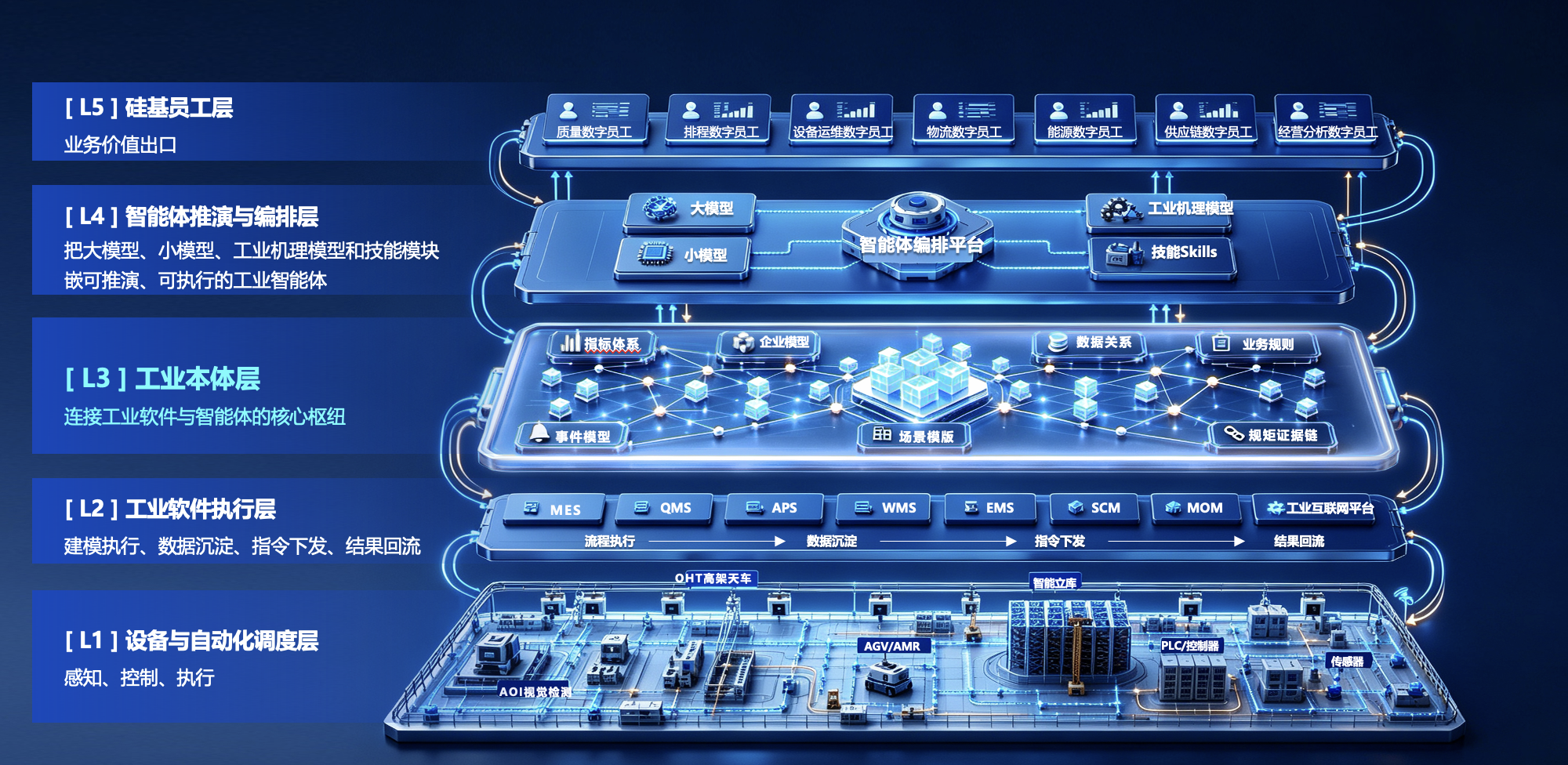
Focusing on specific tasks such as production anomalies, quality analysis, and equipment maintenance, GTronTec relies on its self-developed Agent Space industrial-grade agent platform to consolidate industrial knowledge, business processes, and expert experience into callable skills. Through collaboration between large and small models, digital employees can autonomously complete task decomposition, multi-source data invocation, anomaly assessment, and optimization scheme generation, forming intelligent applications for different business scenarios.
The project has achieved enterprise-level implementation. In a project practice serving a semiconductor company, the average closure time for important production anomalies can be shortened from several hours traditionally to 0.5 hours, releasing more than 25% of transactional work hours for front-line duty personnel, while supporting 7×24 continuous monitoring of production quality. Industrial data is thus further integrated into anomaly handling, quality management, and other business processes, forming an application closed loop from data perception to analysis and decision-making and then to task execution.

Meanwhile, the “Multi-Agent Collaborative Energy-Carbon Brain Platform,” jointly submitted with China Carbon Asset Management, which won the third prize in the Green and Low-Carbon track, focuses on high-energy-consumption panel manufacturing scenarios. The platform focuses on high-energy-consumption panel manufacturing scenarios and addresses issues such as high energy consumption and complex correlations between production and energy data. With “semantic interoperability, trusted processing, and full-process evidence retention” as the core, it connects data from four domains—on-site operations, production and operations, accounting factors, and supporting certificates—into an object chain of equipment, systems, processes, batches, products, and orders, building an energy-carbon data foundation that is calculable, adjustable, and verifiable. The platform deploys six types of agents: data access and quality, product carbon accounting, facility energy efficiency optimization, production energy-carbon diagnosis, green power association and verification, and energy-carbon operational insights. Through collaboration between large and small models, large models understand business tasks and break down steps, while specialized small models handle precise calculations such as energy consumption baselines, load forecasting, anomaly diagnosis, and product carbon calculation, realizing a full-chain closed loop from data access to diagnosis, strategy, execution, and review.
The platform’s application scenarios can connect facility and production domains. In the facility domain, for HVAC, air compression, power supply and distribution, and other utility systems, agents can read production loads and environmental thresholds, generate constraint-based operation strategy recommendations, execute them after confirmation by facility and production personnel, and feed results back for review. In the manufacturing domain for product carbon management, it collects activity levels, emission factors, and green power certificates along batch and process paths, forming traceable carbon details to support customer disclosure and green supply chain assessment.
At present, GTronTec and Hubei China Carbon Asset Management Co., Ltd., a subsidiary of Hubei provincial state-owned enterprise Hongtai Group, have jointly established Energy-Carbon Octopus (Hubei) Artificial Intelligence Technology Co., Ltd., making a strategic extension toward vertical large models in the energy-carbon field. Energy-Carbon Octopus, as the first provincial state-owned AI energy-carbon vertical-domain large-model enterprise, is also a key move in GTronTec’s strategic extension of its “AI + Manufacturing” capabilities into the green and low-carbon track.
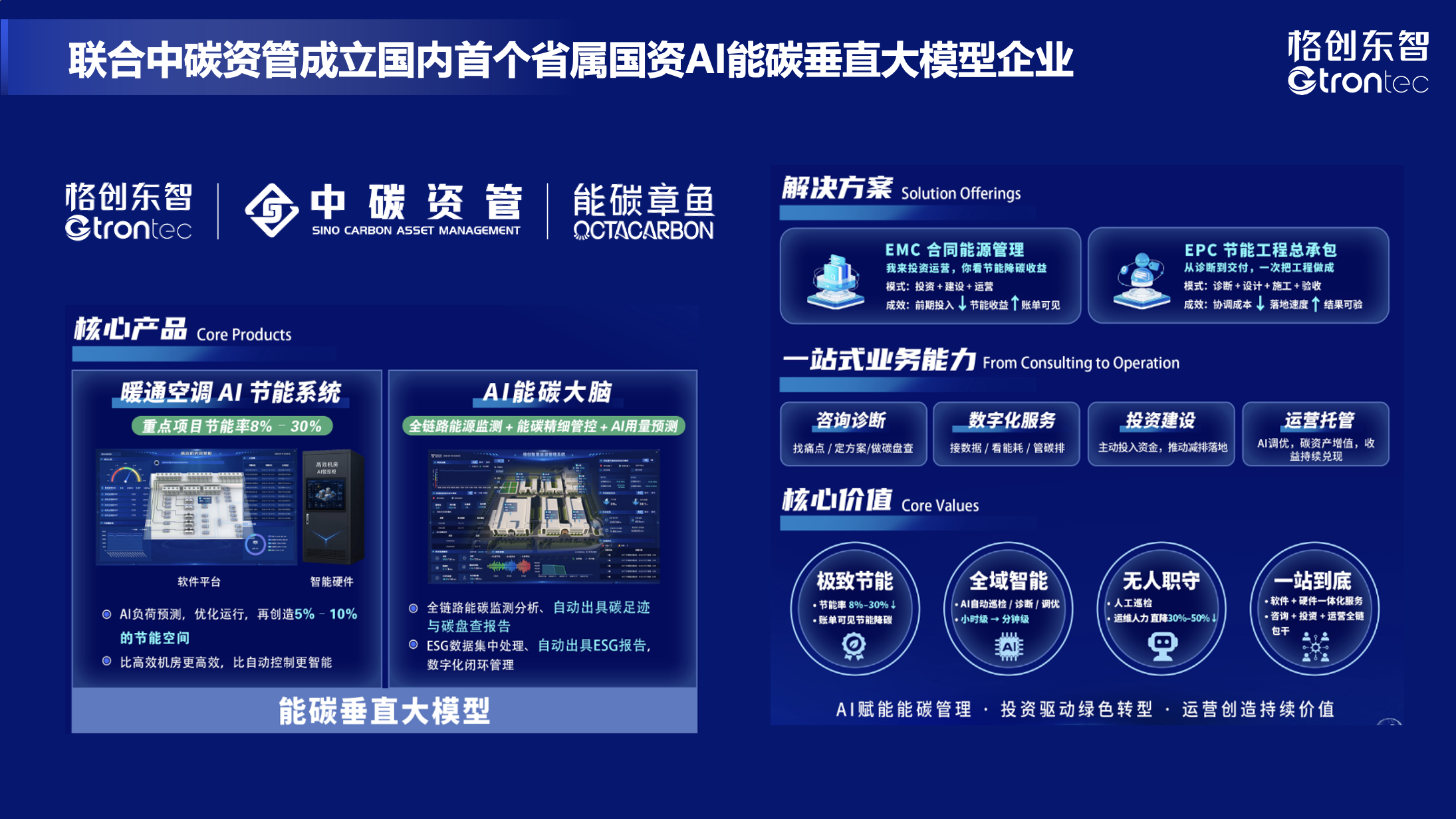
The two projects focus respectively on production operations and energy-carbon management, with different application scenarios, but both core aims point to unlocking data value in complex manufacturing business, connecting data scattered across different systems with industrial knowledge and business processes, and further supporting analysis, judgment, and decision-making.
Around this direction, GTronTec continues to build an industrial agent application system. At present, the company has formed an industrial agent product matrix covering production, equipment, quality, smart facilities, smart logistics, digital supply chain, and other scenarios, with “Octopus Brain” as the central hub for industrial intelligent decision-making, promoting further integration of industrial data, industrial knowledge, and business processes.
The two achievements winning awards in the Hubei Division, with the “Autonomous Decision-Making Digital Employee for Manufacturing Scenarios” project advancing to the national finals, represent a phased achievement of GTronTec’s industrial AI in data application, agent technology, and manufacturing scenario implementation. As industrial AI continues to deepen its reach into production operations, GTronTec will also promote the implementation of more agent applications around core manufacturing scenarios, further unlocking the business value of industrial data.