On-site Exchange Event on Digital and Intelligent Transformation of SMEs Held in Wuhan, Hubei
From November 12 to 13, the on-site exchange event on digital and intelligent transformation of SMEs was held in Wuhan, Hubei, focusing on building pilot cities for SME digital transformation and discussing new paths for transformation. Liang Zhifeng, Director of the SME Bureau of the Ministry of Industry and Information Technology (MIIT), and Mu Shuhui, Deputy Director, attended the event. Liu Weijun, Member of the Party Leadership Group and Deputy Director of the Hubei Provincial Department of Economy and Information Technology, delivered a representative exchange speech on behalf of Hubei. Yao Bin, Vice Mayor of Wuhan Municipal People's Government, attended the event and delivered remarks. Representatives from 21 provincial-level SME authorities, including Guangdong, Fujian, Anhui, and Sichuan, and from 37 pilot cities attended the event.
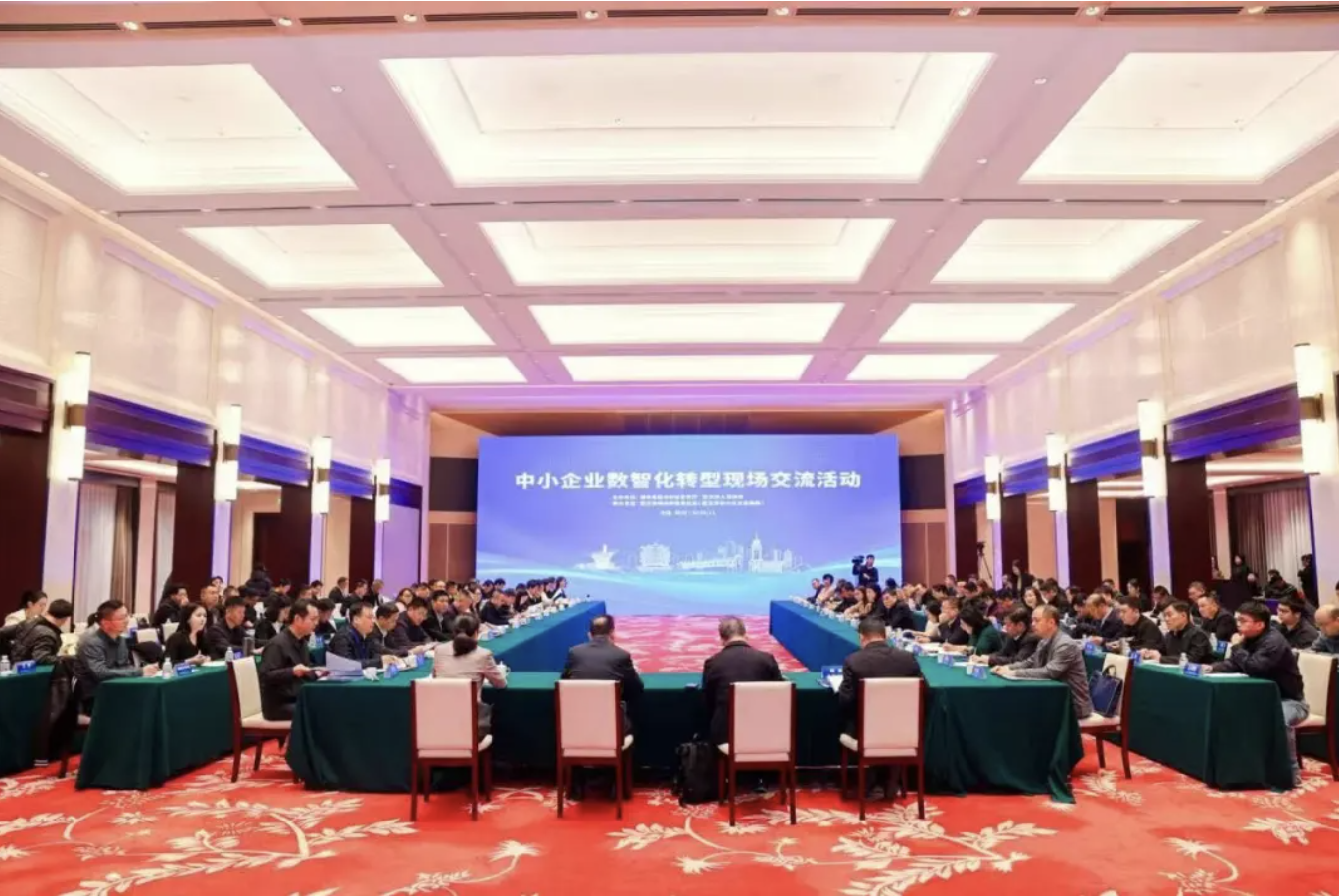
Liu Weijun expressed gratitude to MIIT for arranging the exchange event in Wuhan, Hubei, and introduced Hubei's practical experience in advancing city pilots for SME digital transformation. In recent years, Hubei has adhered to province-city coordination, pilot-driven progress, quality first, and ecosystem co-construction, building a working pattern of 'national pilot leadership, provincial pilot support, and province-wide overall advancement.' It has approved 5 national pilot cities for SME digital transformation, ranking fourth nationwide and first in central and western China; it has designated 11 provincial pilot cities, becoming the first in China to achieve full coverage of prefecture-level city pilots. Hubei has coordinated the advancement of national and provincial pilot tasks for SME digital transformation. Wuhan's final performance evaluation ranked among the top three nationwide, Xiangyang and Yichang ranked among the top nationwide in mid-term performance evaluation, and the first batch of 5 provincial city pilot tasks was successfully concluded. A number of typical cases and work experiences have been recognized and promoted by MIIT.
At the exchange meeting, representatives from pilot cities including Wuhan, Xiangtan, Yulin, Karamay, Tianshui, and Jiujiang, and enterprise representatives including Wuhan Yimu Technology Co., Ltd. and Wuhan Guangzhi Technology Co., Ltd., delivered exchange speeches. Xu Shengmin, Party Secretary and Director of the Wuhan Municipal Bureau of Economy and Information Technology, shared Wuhan's experience on behalf of the city. In recent years, taking the construction of the first batch of pilot cities as an opportunity, Wuhan has made efforts in three aspects: policy, supply, and chain-based coordination. It has issued pilot city implementation plans and the 'AI + Manufacturing' action plan, building a full-chain policy system. It selected four industries, including optical communications and laser equipment and auto parts, for priority piloting, and extended the scope to four self-selected industries, including food processing, textiles and garments.
During the event, Liang Zhifeng and his delegation conducted on-site research at YOFC and Gtrontec, learning in detail about the enterprises' digital transformation, intelligent manufacturing, and technological innovation, and encouraging them to continue to play the leading role of 'chain leaders' and drive coordinated transformation across the industrial chain. Participants conducted field research along two routes to experience the vivid practice of digital and intelligent technologies empowering the real economy, and visited digital transformation benchmark enterprises including Voyah, Dongfeng Lear, Jointown, and Jianmin Pharmaceutical.
Next, the Provincial Department of Economy and Information Technology will earnestly implement the deployment requirements of MIIT and the Provincial Party Committee and Provincial Government, focus on enterprise needs and pilot tasks, accelerate the construction of national and provincial pilot cities, conduct high-quality pilot performance evaluations and summarize and promote experience, further improve the service ecosystem for SME digital transformation, continuously amplify demonstration and chain-driven effects, comprehensively improve the digital and intelligent development level of SMEs, and provide solid support for the high-quality development of the province's industrial economy.
News source: Hubei Industry and Information Technology